Case study · Borrower follow-up
Kredi Engage
Keep borrowers moving. Keep people focused where they matter.
Contents
Inside this case study
Introduction
Momentum is lost before the credit decision
A mortgage pipeline can lose momentum long before a credit decision. A borrower prequalifies, receives a list of documents and then goes quiet. Another asks a simple question and waits for someone to find the answer. Loan officers spend time repeating instructions and chasing incomplete files while the applications that need their judgment compete for attention.
The commercial challenge is not simply to answer more messages. It is to help interested borrowers become applicants the lender can actually review, without making every routine interaction a task for a person.
Kredi Engage brings that purpose to borrower follow-up. Its operating reference is Helen, Kredi’s AI-assisted representative supporting a major Mexican retail bank’s direct-to-consumer mortgage channel.

Chapter 1
The challenge
Every next step depends on another conversation
Chapter 1 · The challenge
Before: a useful first answer is not a complete application
After prequalification, the borrower still has work to do. Documents must be gathered and submitted, requirements understood and questions resolved.
A useful first answer does not automatically produce a complete application.
In a people-led follow-up model, that progression depends heavily on the team’s capacity to welcome applicants, explain requirements and reconnect when a file stalls.
People-led follow-up
- 1Borrower prequalifies and receives a list of documents
- 2Questions wait for someone to find the answer
- 3Loan officers repeat instructions and chase incomplete files
- 4Reconnecting with stalled files depends on team capacity
- !Applications that need judgment compete for attention
The capacity problem
More prospects mean more conversations, and not every conversation needs a loan officer’s expertise.
The opportunity is to give routine guidance a consistent operating layer while reserving human attention for exceptions, promising applications and consequential commercial decisions.
Chapter 2
The solution
Follow-up connected to the application
Chapter 2 · The solution
After: follow-up connected to the application
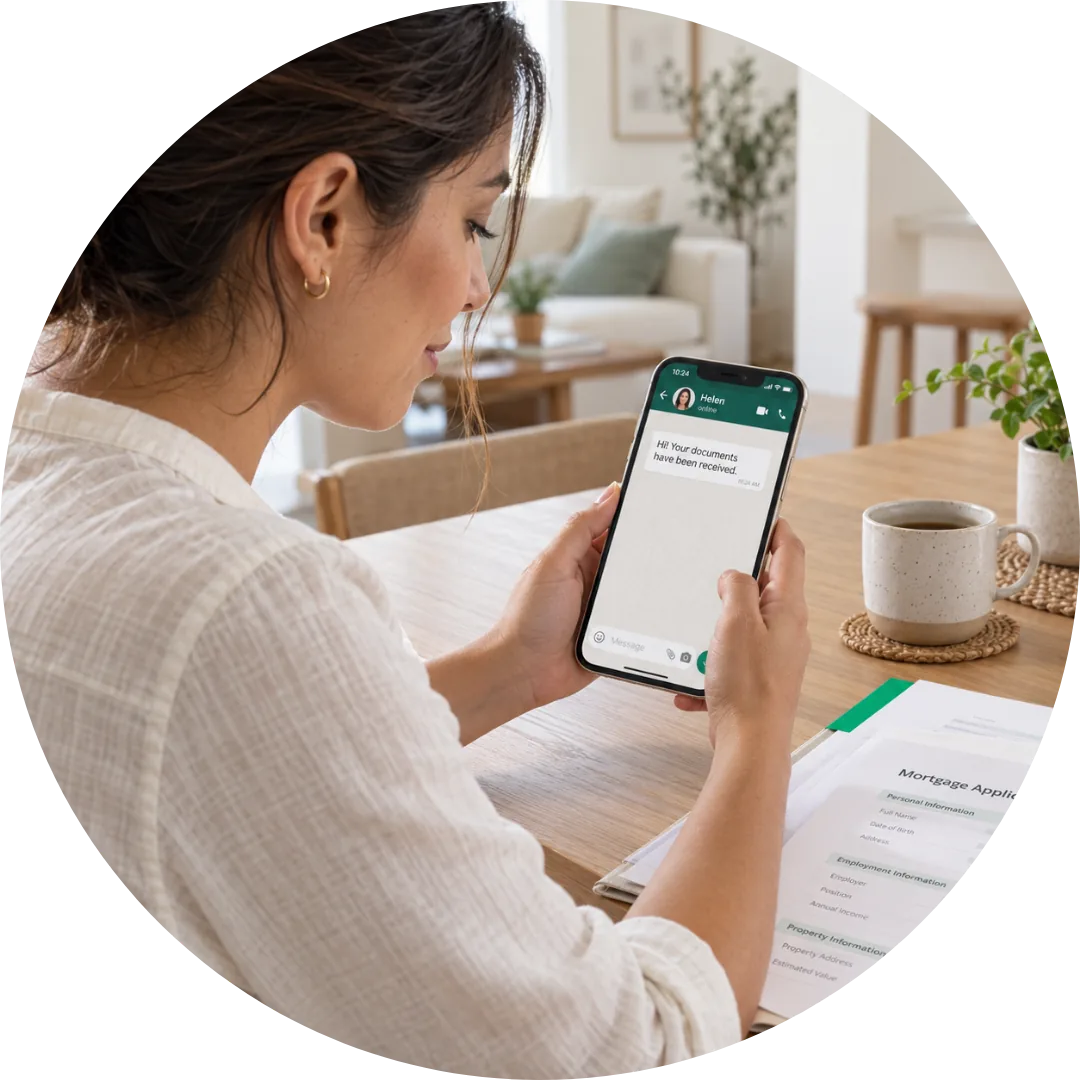
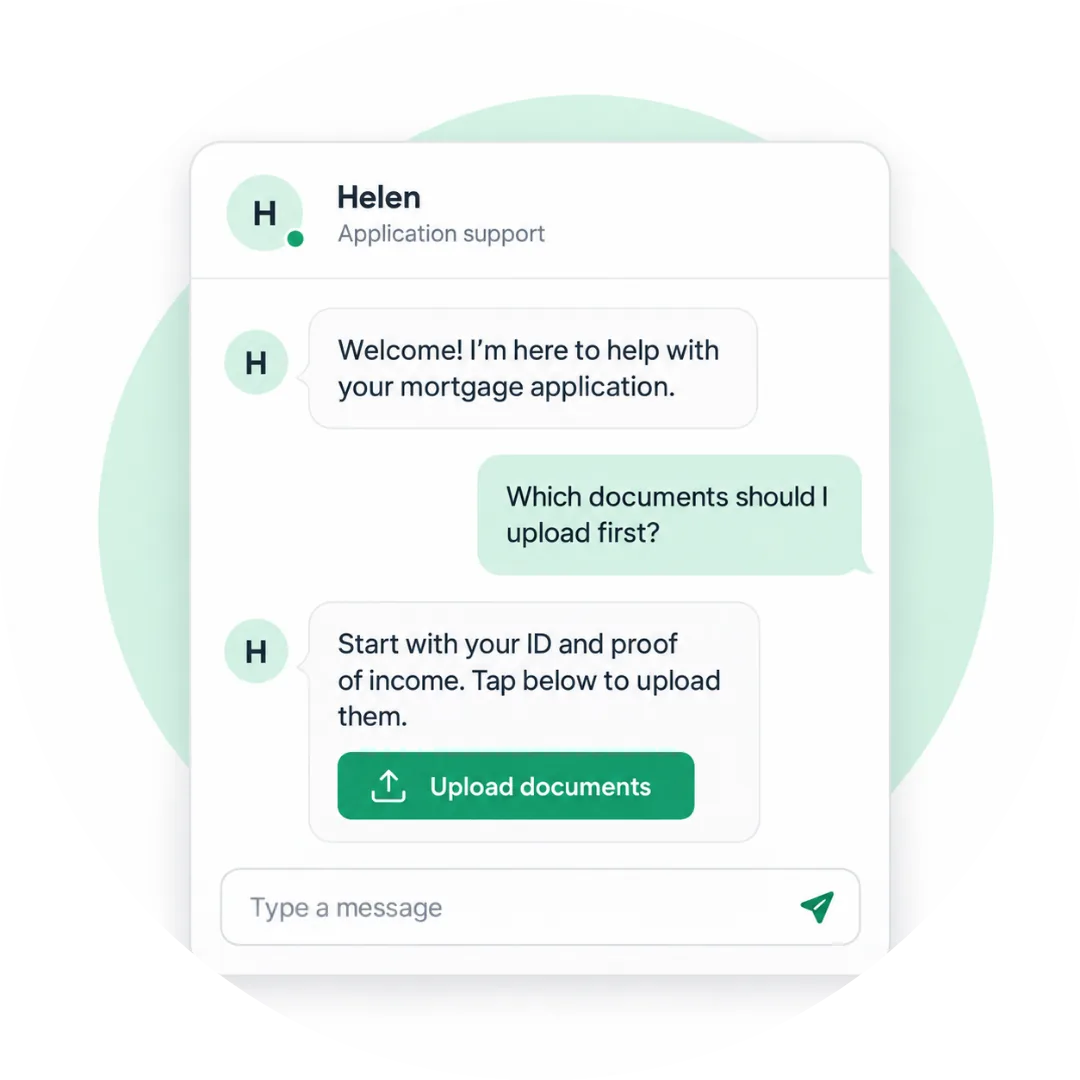
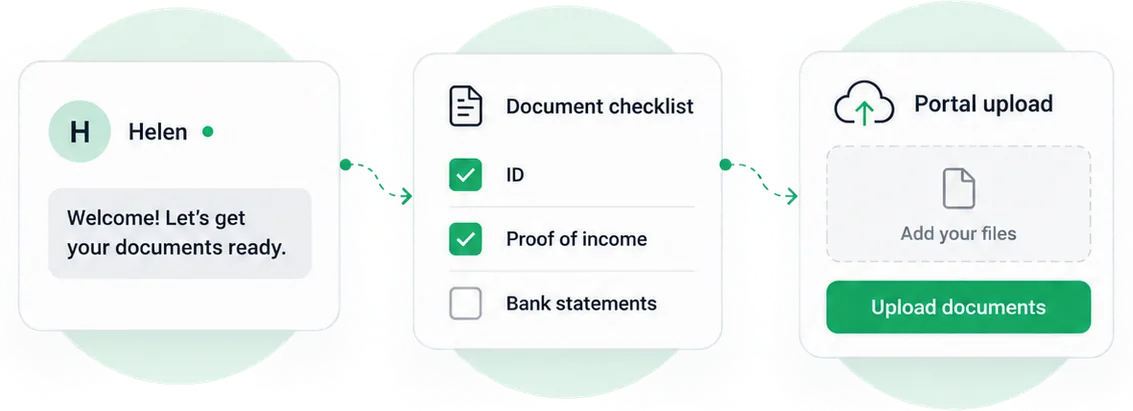
In the Mexican operation, Helen begins after successful prequalification. An approved WhatsApp welcome introduces the next step, and subsequent guidance uses the borrower’s application context rather than treating every message as a new, disconnected inquiry.
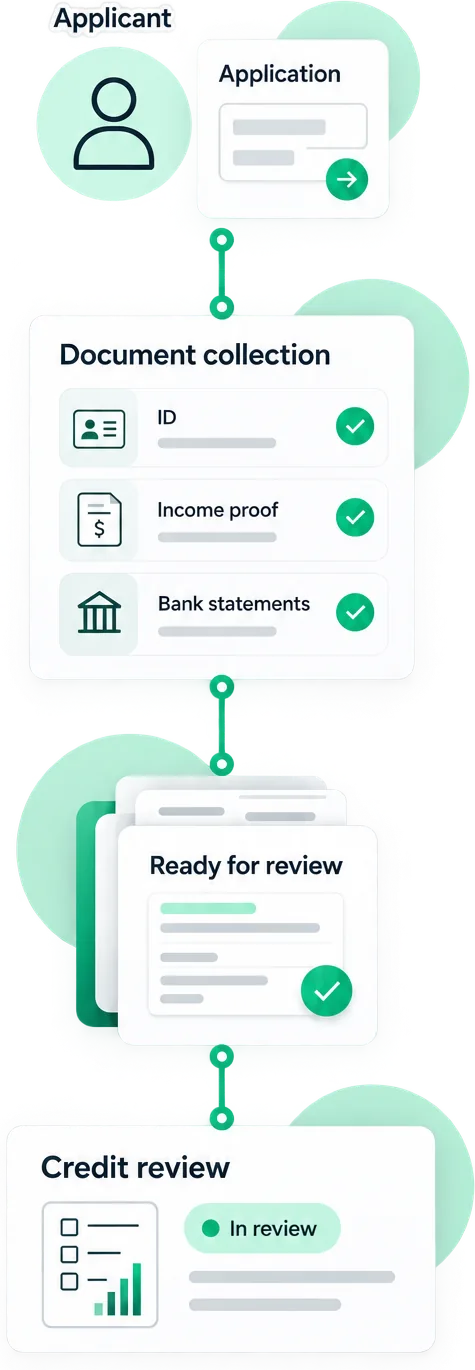
- 1Successful prequalificationHelen’s work begins here(Kredi Engage · Helen)
- 2WelcomeAn approved WhatsApp message introduces the next step(Kredi Engage · Helen)
- 3Application-aware guidanceAnswers use the borrower’s file and stage(Kredi Engage · Helen)
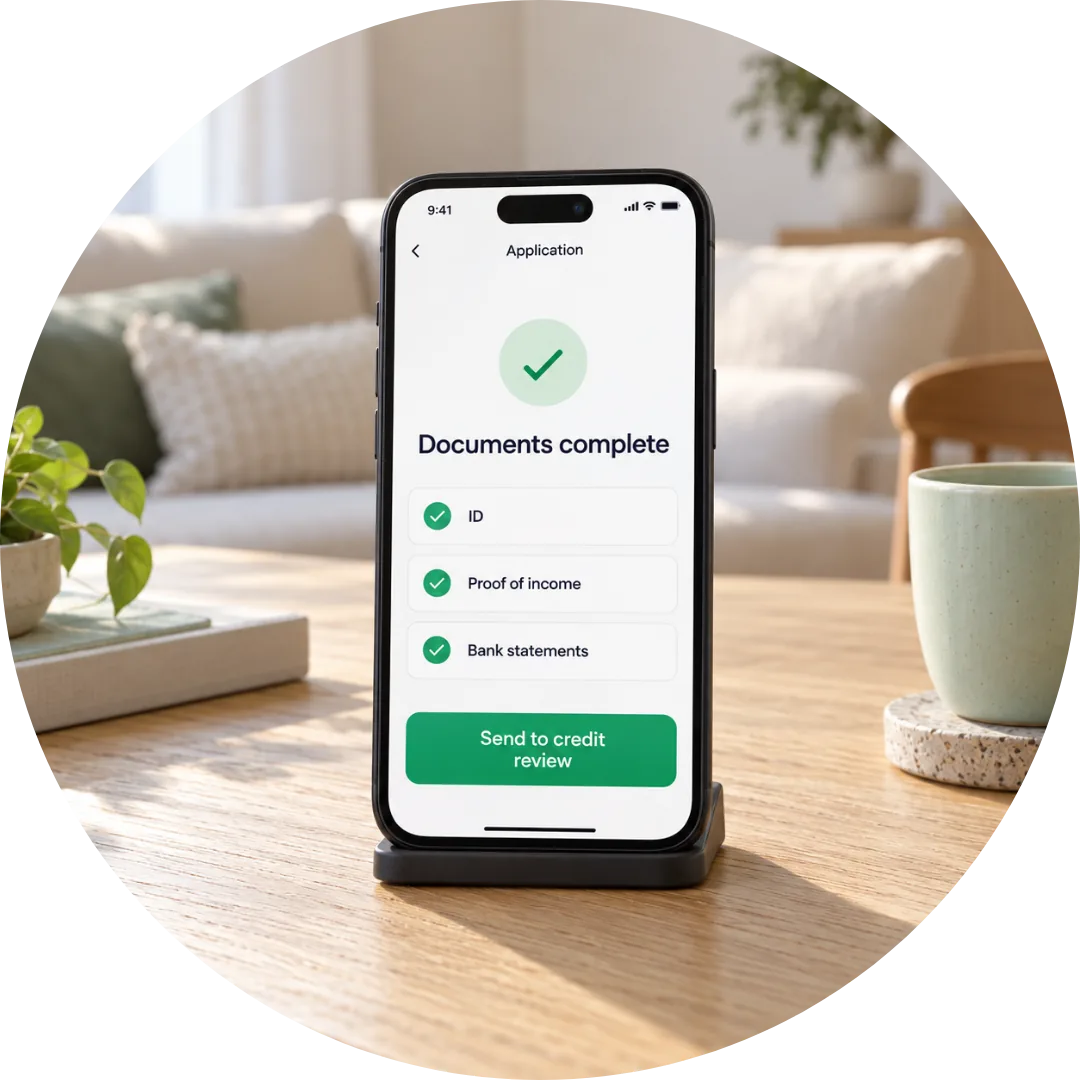
- 4Document completionRequirements clarified; borrower guided back to the portal(Kredi Engage · Helen)
- 5Lender reviewThe credit decision remains with the bank(Your bank)
Helen can explain what the borrower needs to do next, help clarify document requirements and guide the applicant back to the portal. The credit decision remains with the bank.
What Helen draws on
- Application-stage and document information
- Conversation history
- Approved policy knowledge
Chapter 2 · The solution
When an applicant goes quiet
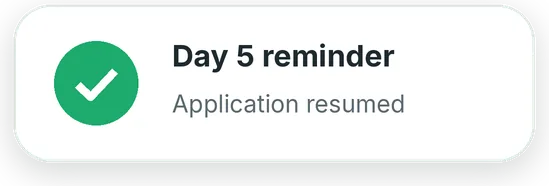
Structured reminders provide another opportunity to resume. The inspected implementation included four checkpoints, subject to eligibility and application-state rules.
- Day2Checkpoint 1
- Day5Checkpoint 2
- Day10Checkpoint 3
- Day15Checkpoint 4

Follow-up is connected to an open task—not simply a campaign sending the same message to every prospect.
Chapter 2 · The solution
Automation with human responsibility
Not every borrower needs another automated answer. Requests for a person, serious frustration and other exceptions are flagged for human review.
Helen handles
- Automated first touch and welcome
- Routine process questions
- Document requirement guidance
- Reminders on unfinished tasks
- Flagging exceptions for the team
People own
- Response and resolution of flagged exceptions
- Supervision and targeted follow-up
- Proposal acceptance
- Appraisal
- Closing
The objective is not to remove people from the mortgage journey. It is to stop making human availability the prerequisite for every explanation, reminder and routine next step.
Chapter 3
The results
Measured by progression, not message volume
Chapter 3 · The results
An operating footprint of more than 5,000 applications
5,109
Applications assigned to Helen
July 2026 operational snapshot.
4,007
In the initial-document stage
Where borrower follow-through determines whether a file can reach review.
The largest workload sits before the file is ready for the bank’s analysts: answering questions, explaining requirements and maintaining contact while borrowers assemble their documents.
These are application records in an operating snapshot, not a count of funded loans or proof that every applicant received a delivered message. They establish the scale and location of the follow-up workload.
Progression to credit review
~32%
of applications progressed from initial-document collection to the bank’s credit-review intake over the preceding 30 days.
The primary measure was progression into review—not chatbot activity or message volume.
Chapter 3 · The results
Reading the result with care
Broadly in line with—and slightly above—the reference
The reported result placed the AI-assisted operation slightly above the historical people-led reference. The comparison is operational rather than a controlled attribution study; it does not establish that automation alone caused the difference.
Why it matters commercially
Routine automated guidance was part of a working mortgage process in which borrowers progressed into review.
The relevant outcome was a file advancing through origination—not merely a conversation being answered.

Conclusion
The transferable operating pattern
For credit unions, community banks and other lenders, the transferable lesson is not the channel. It is the operating pattern.
Connect guidance to the application
Answers start from the borrower’s stage and documents, not a blank slate.
Keep approved knowledge close
Approved policy knowledge sits next to every conversation.
Follow up on unfinished tasks
Reminders are tied to an open task, not a broadcast campaign.
Direct human attention where it counts
Exceptions and consequential decisions go to people.
Channel note WhatsApp is the demonstrated channel in this Mexican reference; a lender’s channel and system requirements would be scoped separately.
Conclusion
A stronger pipeline starts with follow-through
Kredi Engage addresses the gap between a borrower’s initial interest and an application ready for review. At scale, that gap is a commercial workload—not just a customer-service problem.
A stronger pipeline is built when routine guidance keeps borrowers moving and the people behind the process have room to focus on the moments that matter.
Let’s talk about your borrower follow-up
Eduardo Barrientos · eduardo.barrientos@kredi.dev